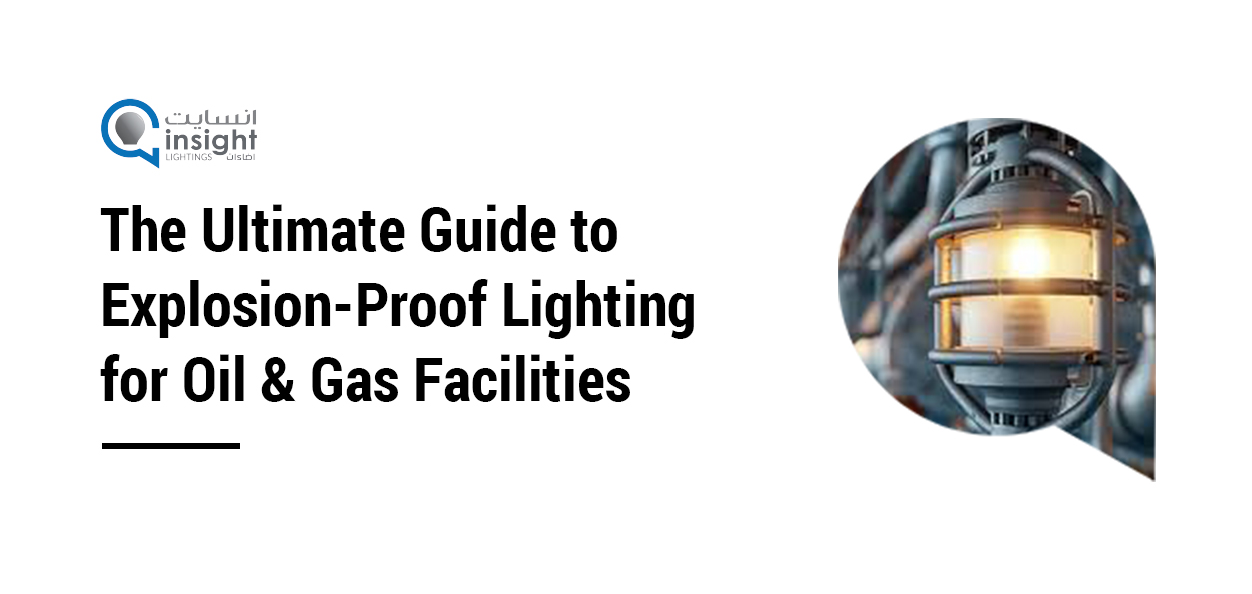
A single spark in the wrong place inside an oil and gas facility can trigger consequences that no emergency response plan fully prepares you for. This isn’t theoretical — it’s the reason why every light fitting installed in a hazardous area goes through an entirely different specification and certification process than anything used in standard industrial or commercial settings.
Explosion-proof lighting is one of the most technically specific and safety-critical procurement decisions a facility team makes. Yet it’s also one of the areas where corners get cut — usually because the person making the purchasing decision doesn’t fully understand what the certification markings mean or why zone classifications matter. This guide fixes that.
What Explosion-Proof Lighting Actually Does
The name can be misleading. Explosion-proof fixtures aren’t for external blasts—they contain internal ignition sources to prevent ignition outside.
The engineering behind this is precise. Enclosures are heavily reinforced. Threaded joints are tightly engineered to prevent flame from escaping. Surface temperatures are controlled so the fixture won’t ignite the surrounding atmosphere. Every part—gaps, seals, and materials—is carefully designed and tested.
The underlying principle is containment. If something goes wrong inside the light, nothing gets out.
Why Oil & Gas Facilities Cannot Cut Corners Here
In a warehouse or office block, a lighting fault means a room goes dark and maintenance gets called. In an oil refinery, gas processing plant, or offshore platform, the same fault in an uncertified fixture can become an ignition source in an atmosphere that’s already primed.
Hydrocarbon vapours behave unpredictably. They don’t stay in one location — they travel through ventilation runs, along pipe routes, and into spaces that appear separated from the primary process area. A fitting that isn’t rated for these conditions doesn’t need to be directly above the hazard to cause a problem.
There’s also a compliance dimension that carries real consequences. Qatar and the broader Gulf region follow IEC 60079 series standards alongside ATEX classifications — internationally recognised frameworks that define exactly which equipment is required in which zones. Facilities that install non-certified equipment don’t just carry a safety risk. They carry insurance liability, regulatory exposure, and, in the event of an incident, potential criminal accountability for the people who signed off on the specification.
Hazardous Zones and What Each One Demands
Hazardous areas in oil and gas facilities are classified into zones based on how frequently and for how long a flammable atmosphere is likely to be present. Getting this classification right before procurement is fundamental — not a formality.
Zone 0 has flammable gases present continuously, so it needs the highest protection.
Zone 1 has gases present during normal operations, so it also requires certified equipment. Lighting here must be rated accordingly.
Zone 2 covers areas where a flammable atmosphere is unlikely under normal conditions but could appear during a fault or abnormal event. Zone 2 is lower risk but still needs rated equipment—standard lighting isn’t allowed.
Zone 2 fixtures also cannot be used in Zone 1.
Types of Explosion-Proof Lighting in Oil & Gas Sites
Different areas need the right lighting based on the zone and environment.
Flameproof LED fixtures are the most widely deployed across processing areas, pump rooms, and compressor stations. The combination of flameproof containment engineering with LED efficiency means longer service intervals — which matters considerably in locations that are difficult or hazardous to access for maintenance.
Linear LED battens approved for hazardous areas serve enclosed spaces such as control rooms that sit within or adjacent to the hazardous perimeter, and utility rooms inside classified zones.
High bay fixtures are used in large indoor spaces.
Emergency lighting must stay on during critical situations.
Portable explosion-proof lights are used for maintenance and inspection in confined or temporary hazardous areas.
The portability requirement doesn’t reduce the certification standard — these fixtures need to meet the same zone requirements as fixed installations.
What to Check Before You Buy
Certification markings are key to compliance and must be read correctly.
Look for IECEx or ATEX marks to confirm testing. Gas groups show which gases the fixture is safe for, and the temperature class ensures it won’t exceed safe heat limits.
Buying from a supplier who understands these markings and can actively match the right certified product to the right zone is as important as the fixture specification itself. A correctly compliant fixture installed in the wrong zone, or fitted using incorrect methods, provides no meaningful protection.
How Insight Lightings Handles Oil & Gas Projects in Qatar
Insight Lightings supplies certified hazardous area equipment in Qatar, supporting projects from assessment to installation.
It is ISO certified and provides full documentation for compliance.
Working with the right supplier helps reduce risk and ensure safety.
Get the Specification Right Before Procurement Begins
Mistakes in explosion-proof lighting are costly and time-consuming to fix.
It’s best to get it right at the specification stage.
If your facility is in development, expansion, or undergoing a compliance review, contact Insight Lightings to discuss your zone requirements and get the technical guidance your project needs from the start—before costly mistakes happen.
Visit insightlightings.com or call +974 40013333.